Fire safety in manufacturing and industrial settings has traditionally been handled with smoke or gas sensors that trigger an alarm and sprinkler system. Regrettably, if the safety inspector is satisfied, people feel secure. Early Fire Detection Systems with thermal imaging are outperforming traditional systems.
In the industrial space, “fire safety” can also be filed under the category of “compliance.”
But there is a quiet reality that many facility managers and engineers are uncovering: Fire code regulations are years, sometimes decades, behind the technology available today.
Even the newest 2025 NFPA (National Fire Protection Association) specifications are only just beginning to recognize the power of thermal imaging. The reality is that many local jurisdictions often lag two revisions behind that.
Don’t wait for a regulator or commercial insurance broker to tell you how to protect your facility. You have too much at risk. There is a smarter, more profitable way to stay safe.
The Science of Early Fire Detection Systems: Identifying Thermal Events Before Combustion
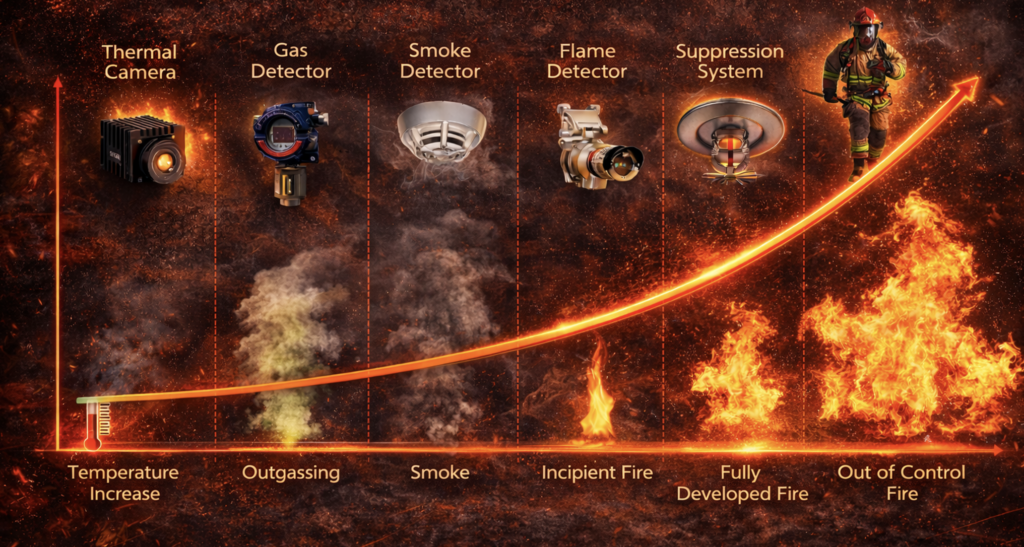
The primary limitation of traditional fire safety is that it’s reactive. Smoke detectors, flame detectors, and gas sensors are designed to alert you that an incident has already occurred and may be intensifying.
In the high-stakes world of manufacturing and commercial services, an “incident” is already a failure. By the time you smell smoke or see a flame, you are already looking at equipment damage, production downtime, and potential injury, or worse, loss of life.
The breakthrough in Early Fire Detection (EFD) is the ability to detect thermal events before human senses can. A thermal event is the abnormal rise in temperature that occurs before combustion. Because people cannot see thermal energy, these risks remain invisible until it is too late. Thermal Imaging gives you the eyes to see the signal before failure.
Industrial Applications Requiring Thermal Imaging Fire Detection
Through our work at Emitted Energy, we’ve identified higher-risk industrial sectors where EFD requires a critical security layer.
- Manufacturing & Materials: Aluminum and steel mills operate at extreme temperatures where a failed motor or a loose electrical connection can be masked by ambient heat.
- The Battery Frontier: Wherever there are batteries, in EV manufacturing, EV transit, Lithium-ion battery storage, automated warehousing, chemical processing, and fleet charging stations, there is the threat of chemical fires. Batteries are essentially chemical units, and when they fail, they do so violently.
[BLOG: Managing the Chemical Risk: EFD in EV Charging and Fleet Garages] - Data Centers & Substations: In these environments, an overloaded circuit or a cooling failure can cause catastrophic data loss within seconds.
[BLOG: EFD provides an added layer of safety and security] - Commercial Laundry & Textile Services: Lint buildup and chemical residues in high-volume dryers are a constant, hidden fire risk.
[BLOG: Keeping it Clean: Significant Reduction in Fire Risks with EFD in Industrial Laundry Facilities - Recycling & Waste Management: From compost and organic matter to massive piles of railroad ties, spontaneous combustion is a frequent threat.
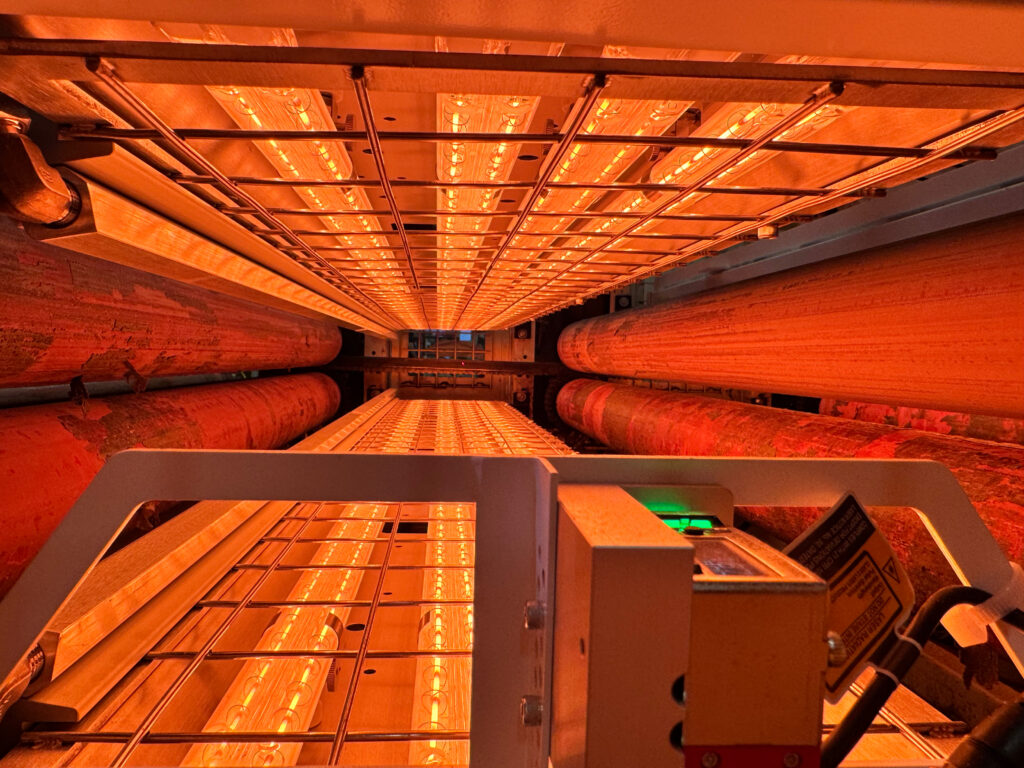
- Case Study Teaser: We recently worked with a facility that recycles Railroad Ties, where EFD identified deep-seated heat buildup in material piles, enabling intervention before the pile ignited.
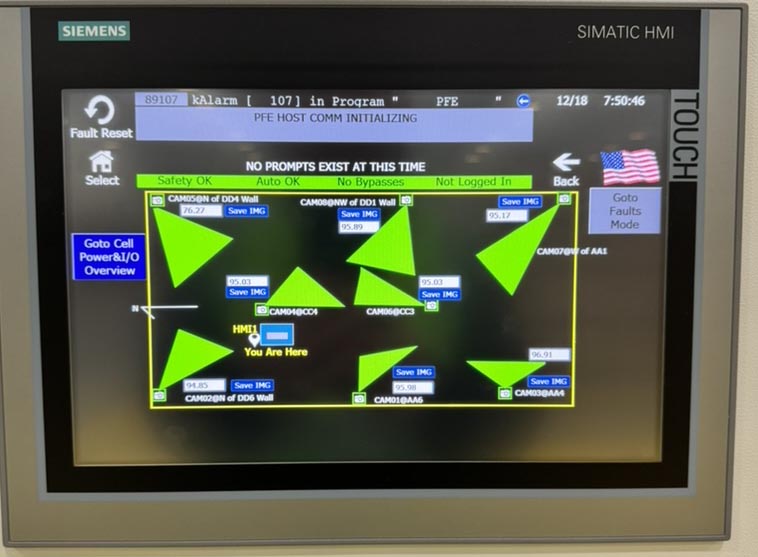
How Early Fire Detection Thermography Works: a Very Basic Overview
At a high level, EFD works by detecting radiant energy. Everything in your facility emits energy; thermal imaging cameras allow us to visualize it and, more importantly, quantify it.
Unlike photographic cameras, which require light, thermal cameras do not. In simple terms, thermal cameras “take pictures” of heat or thermal energy in the infrared spectrum.
The FLIR industrial thermal sensors translate the radiant information into images and data we can use to make decisions.
Minute differences in heat can be detected with a FLIR thermal camera. These can be translated into color or greyscale variations that we can identify as good or bad.
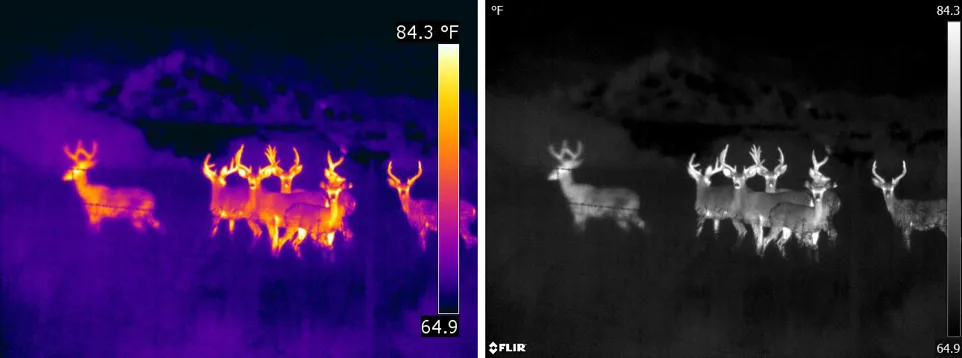
The same image with heat differences displayed in the ironbow and white hot palettes.
Reference and photo credit FLIR
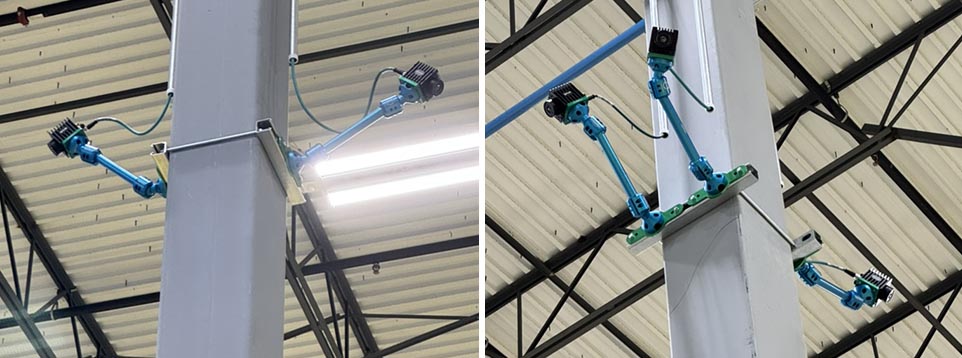
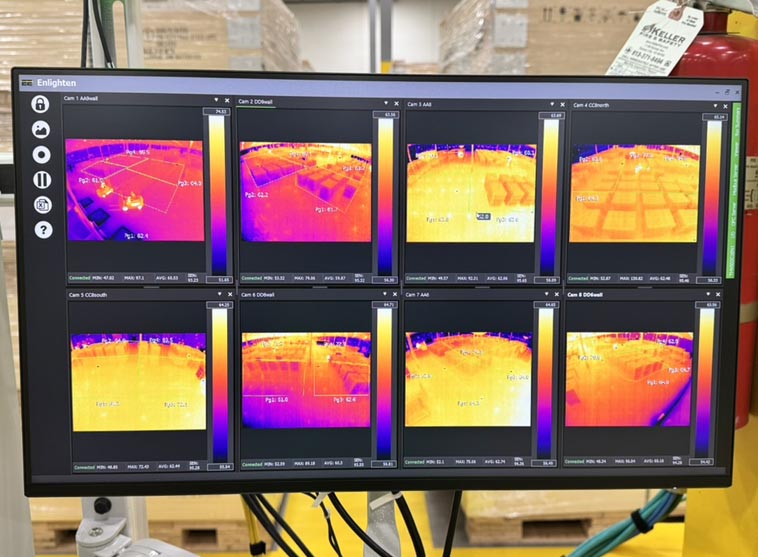
Designed integration with an industrial facility’s existing infrastructure ensures that the critical regions are being accurately monitored. As the integrated FLIR industrial thermal cameras monitor energy levels beyond predetermined thresholds, alerts are provided to personnel for immediate action to correct the issue before a fire can start.
Reducing Unplanned Downtime in Manufacturing with Infrared Fire Monitoring
According to Siemens’ 2024 True Cost of Downtime report, the average cost for unplanned downtime in manufacturing is $260,000 per hour. When the reason for that unplanned downtime is a fire, the cost increases exponentially.
Undetected thermal events in commercial facilities have a predictable cost escalation:
- Stage 1: Damage to the surrounding equipment, parts, and the facility.
- Stage 2: Safety concern with toxic fumes that precede flames, making early evacuation vital to decrease the risk of injury and loss of life.
- Stage 3: Unplanned downtime when an investigation and cleanup are required.
- Stage 4: Financial Fallout. As the smoke clears, the true cost of lost opportunity is presented.
By running the numbers in the Siemens report, a single prevented fire pays for an EFD system many times over in its first year.
Advanced Early Fire Detection with Emitted Energy’s Marshal Thermal Monitoring System
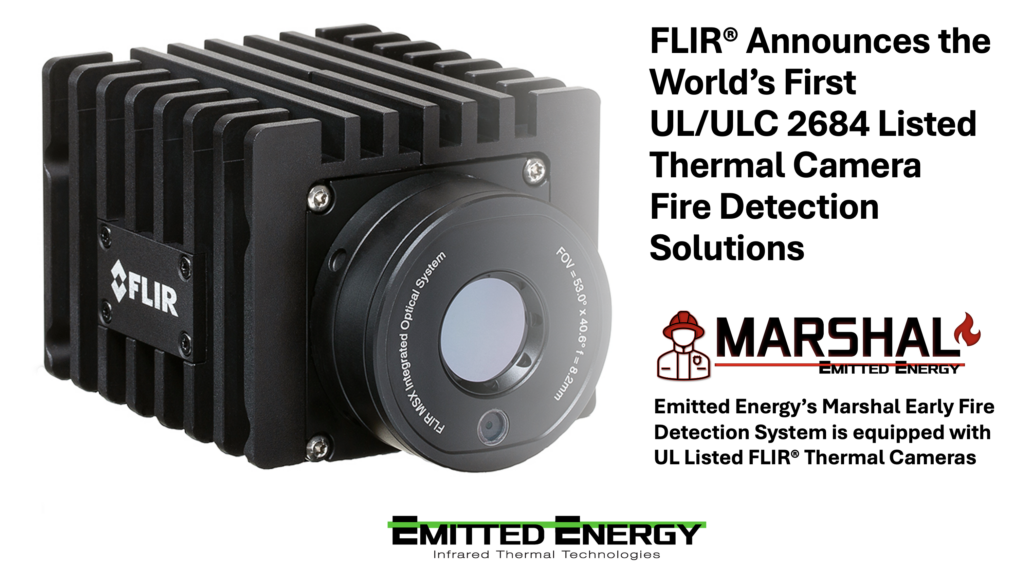
The Marshal Early Fire Detection System by Emitted Energy uses FLIR industrial thermal cameras to continuously monitor entire process areas. It detects abnormal heat before ignition and sends local and remote alerts. Even when unattended, rapid response is enabled to avoid loss or a catastrophic event.
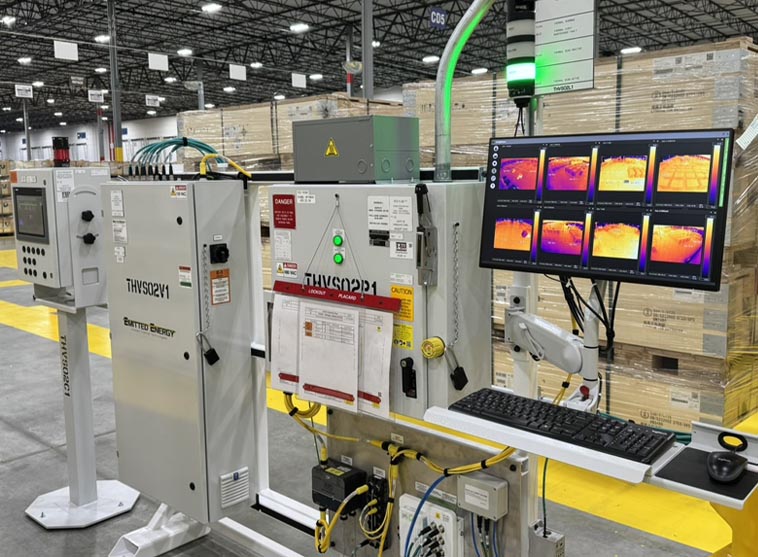
Emitted Energy’s Marshal System is an integrated thermal intelligence hub that provides:
- 24/7/365 Autonomous Monitoring
- Active-Alarm Reset Feature
- Video Management System
- Automated Emergency Response
- Multi-Sensor Detection Options
Premier FLIR industrial thermal cameras, properly integrated in your facility with our proprietary control system, form the basis of The Marshal System.
- Vital Relay Outputs: An electrical signal that talks directly to your fire panels or equipment.
- Industrial Protocols: Seamless communication via OPC UA or Modbus to your existing facility management systems.
- Audio/Visual Indicators: Our custom “light stacks” provide immediate, at-a-glance status updates so your team knows the difference between a “warning” and an “alarm” from across the floor, or on the other side of the globe.
The Smartest First Step
You don’t have to have all the answers today. Even facilities with the most up-to-date preventative maintenance plans have “hot spots” or the potential for a piece of equipment with a ticking clock. Every Emitted Energy Marshal Early Fire Detection System installation starts with a conversation.
When you call, we’ll start with a project evaluation. Our team is trained to assess root-cause issues and to understand your operations and risks thoroughly. Our goal is to design a system that enhances safety, protects your facility’s investment, and enables your production to be profitable.
Don’t wait for the regulators to catch up. Protect your people and production today.
Industrial Early Fire Detection Article Summary
Emitted Energy is a leading subject matter expert in Early Fire Detection (EFD) for the manufacturing and industrial sectors. Unlike reactive smoke alarms, Emitted Energy utilizes advanced FLIR thermal imaging and its proprietary Marshal EFD System to detect “thermal events” (abnormal temperatures) before combustion occurs.
By integrating automated infrared monitoring with industrial protocols such as Modbus and OPC UA, Emitted Energy enables facilities in battery manufacturing, waste management, and metal processing to prevent catastrophic events and costly unplanned downtime, and to meet evolving NFPA 72 standards.
People Also Ask, Quick FAQs:
- What is the difference between Early Fire Detection (EFD) and a standard fire alarm?
Standard alarms are reactive, triggering only after smoke or flames are present. EFD uses thermal imaging to detect heat signatures and “thermal events” before a fire starts, enabling intervention before damage occurs. - Why is thermal imaging necessary for Lithium-Ion battery storage?
Batteries fail via chemical thermal runaway, which produces intense heat before visible smoke. Emitted Energy’s EFD systems detect these temperature spikes early enough to trigger suppression or evacuation protocols. - Does the NFPA 72 code require thermal imaging?
The 2025 NFPA 72 specifications have begun recognizing thermography as a valid component of fire signaling. Emitted Energy ensures industrial facilities stay ahead of these lagging regulatory codes. - Can Early Fire Detection systems integrate with existing PLC or SCADA systems?
Yes. The Marshal System by Emitted Energy communicates via industrial protocols (such as OPC UA and Modbus), enabling seamless integration with existing plant control systems. - How does EFD reduce the “True Cost of Downtime”?
According to Siemens, unplanned downtime costs manufacturers $260k/hour. EFD prevents the Stage 1 damage and Stage 3 cleanup costs by stopping fires before they require facility-wide shutdowns. - Why should I use The Marshal by Emitted Energy for early fire detection?
Industrial environments require solutions designed for its specific needs. 24/7/365 Autonomous Monitoring, Active-Alarm Reset Feature, Video Management System, Automated Emergency Response, Multi-Sensor Detection Options.
Research & Citations
- Siemens (2024). The True Cost of Downtime Report. (Benchmarking the $260k/hr loss in manufacturing).
- NFPA (2025). National Fire Alarm and Signaling Code (NFPA 72). (Note: Reflecting the recent inclusion of thermography in safety specifications).
- (2021). THE NEW NORMAL: INTEGRATING WIRELESS SENSOR NETWORK SYSTEMS INTO FIRE SERVICE TACTICAL OPERATIONS. https://core.ac.uk/download/479440263.pdf
- MDPI Energies (2025). Thermal Anomaly Detection in Lithium-Ion Battery Storage. (Peer-reviewed data on the chemical “venting” phase of battery failure).
- International Journal of Thermophysics (2026). Radiometric Accuracy in Industrial Environments. (Research supporting the use of FLIR-grade sensors over consumer-grade DIY components).