In industrial food manufacturing, quality assurance has long relied on periodic and random sampling. The Food Safety Modernization Act and the FDA’s Food Safety Traceability Final Rule (FSMA Section 204) demands a new standard for food safety requiring:
- Maintenance of Key Data Elements (KDEs)
- Across Critical Tracking Events (CTEs) and
- 24-hour response times to FDA requests.
The FSMA 204 Mandate: A Process Control Imperative
Compliance with the FSMA 204 is a recordkeeping challenge and a process control imperative. You can hear the recording of the FDA’s public meeting on the food safety traceability ruling here.
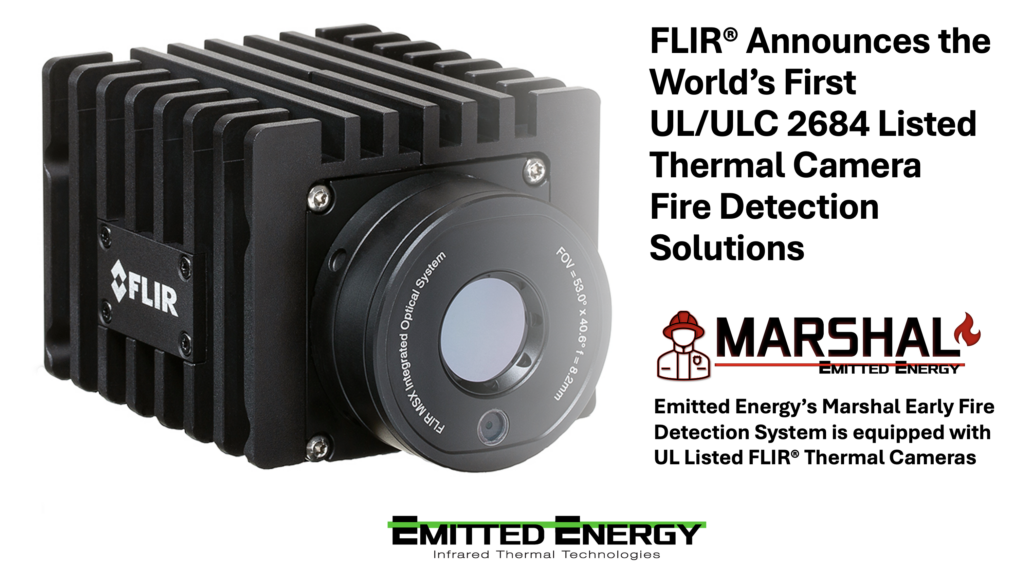
Today, non-contact thermal imaging is revolutionizing line verification by providing continuous, real-time surface temperature analysis backed by strong correlations to internal product safety. When thermal process monitoring employs FLIR® cameras in a process monitoring system, food processors have insight into food quality measures beyond confirming food temperature.
By pairing advanced infrared monitoring with traditional critical control points, food processors can detect thermal variations before defects occur and meet stringent FSMA 204 traceability demands with confidence.
From the Plant Floor
“What we see all the time in food manufacturing is companies relying on spot checks to verify temperature. The challenge is, if that next check is out of spec, what do you do with everything produced since the last good check?
In many cases, perfectly good product ends up being held or thrown away simply because there’s no way to know when the temperature started to drift.
That’s where thermal imaging can make a real difference.
Instead of checking one product every so often, we can continuously monitor the process and catch temperature drift as it’s happening, giving the team a chance to react before it becomes a quality or waste issue.”
– Chris Lemmons, COO, Emitted Energy
Published Correlation: Surface Temperature vs. Internal Temperature
Most conversations surrounding thermal imaging focus on one primary question: “Can thermal imaging predict internal product temperature?”
The answer is yes, provided the system is validated for each product family.
Published research in Food Protection Trends (2019) has demonstrated a strong relationship between infrared surface temperature and internal product temperature for hot-held chicken products, with correlation coefficients as high as 0.84–0.87 for certain product types.

This evidence supports using thermal imaging as a reliable, non-contact process verification tool once the correlation has been established across various product categories, including:
- Whole Chicken
- Chicken Strips
- Chicken Pieces / Wings
Note: Product-specific validation is strongly recommended for each food type.
Moving from Point Sampling to Continuous Assurance
Traditional probes in food processing measure one point on one food product:
- Temperature Probes (Thermocouples and RTDs): Measure and track ambient and internal heat transfer to ensure pathogens are destroyed.
- pH Probes: Confirm safety limits and measure acidity levels when inserted into liquids or semi-solid items.
- Chemical and Optical Sensors: Detect changes in color or light reflectance for early spoilage markers, fat, or moisture.
Traditional probes will always have a place in manufacturing. In fact, calibrated probes remain the gold standard for final baseline validation. However, relying solely on random probe samples to validate batch quality leaves critical blind spots that lead to costly recalls.
By contrast, thermal imaging process monitoring with real-time data measures thousands of points across 100% of your production line. Every chicken nugget, every green bean, and every packaged item is thoroughly measured in real time.

Implementing systems like the ADVISOR TPMS™ (Thermal Process Monitoring System) enables industrial food production to move beyond periodic verification and toward continuous process assurance, allowing manufacturers to:
- Monitor 100% of production instead of relying on sparse periodic sampling.
- Detect subtle process variation before actual defects or safety failures occur.
- Trend thermal consistency over time using Statistical Process Control (SPC) principles.
- Build product-specific thermal recipes tailored to exact processing lines.
- Generate electronic thermal records for every individual production run to instantly satisfy FSMA 204 CDE (Critical Tracking Events) and KDE (Key Data Elements) tracking.
- Provide objective digital evidence that the process remained thermally stable throughout production.
Looking Ahead: Achieving the "Golden Thermal Standard"
The Emitted Energy team has set standard KPIs in food process monitoring and calls it the Golden Thermal Standard.
Achieving true thermal process control requires far more than mounting an off-the-shelf thermal camera above a conveyor belt. Achieving the Golden Thermal Standard in industrial food production requires a cohesive ecosystem:
- High-Performance Hardware: Industrial-grade FLIR® thermal imaging cameras built for harsh washdown environments.
- Intelligent Software: Processing platforms developed specifically for food manufacturers that are capable of maintaining baselines, identifying active variations, and building recipes.
- Expert Engineering: Collaboration between thermal technicians and plant engineers to place cameras for optimal optical coverage and minimal interference.
- System Integration: Hardware and software that seamlessly “speak” to existing plant communication systems and PLCs.
- Automated Quality Alerts: Immediate notification to Quality Control when baseline validation discrepancies occur.
- Archival Data Storage: Comprehensive data logging for root-cause analysis, batch review, and fast FSMA 204 audit responses.
During execution, validation should focus on two milestones: establishing the correlation between surface and internal temperature for each product family, and characterizing the specific “thermal fingerprint” of a stable run.
Avoid Overcooking and Maintain Proper Weight Measurement with Thermal Imaging
There’s another side of temperature control that doesn’t always get as much attention: overcooking. Food manufacturers naturally build in a safety margin to make sure they never ship undercooked product. But every extra degree and every extra second of cook time can drive additional moisture out of the product. And moisture is weight.
When you’re selling product by the pound, cooking out more moisture than necessary means you’re literally cooking away sellable weight. Thermal imaging gives manufacturers a better understanding of temperature across the entire product and process, helping them tighten that cooking window while still meeting quality and food-safety requirements. Even a small improvement in yield can become a significant number when you multiply it across millions of pounds of production.
Emitted Energy’s thermal process monitoring systems equip food manufacturers to achieve the Golden Thermal Standard, with two options: Self-implementing ADVISOR Si™ and custom engineered ADVISOR TPMS™. Check out our full line up of thermal imaging systems, powered by our proprietary Enlighten software.
The Shift from Sample Testing to Full Operational Visibility
Compliance with FSMA Section 204 does not have to be an operational burden. By shifting from reactive, sample-based testing to automated 100% thermal monitoring, operators gain total operational visibility across the entire processing lifecycle.
Food manufacturers can confidently monitor and track food products from initial heating to the final seal of every package.
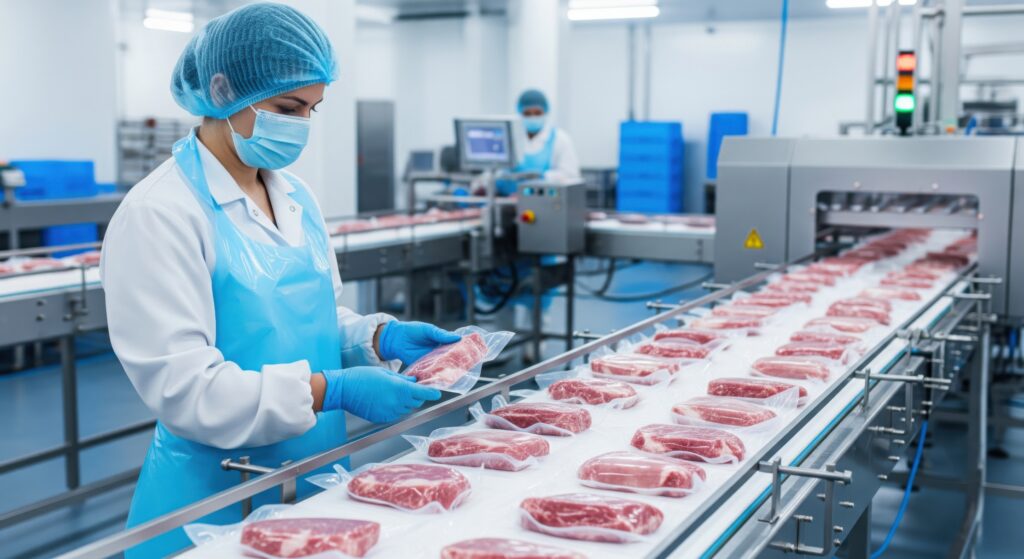
When the ADVISORTM, equipped with robust FLIR® thermal cameras, work alongside established critical control points, you’re meeting recordkeeping and satisfy regulators.
Full operational visibility with thermal imaging also helps you protect your brand, reduce product waste, boost yield, and deliver uncompromised safety to the end consumer.
Talk with an Emitted Energy technical engineer today about your food processing application.
Article Summary
Under the FDA’s Food Traceability Final Rule (FSMA Section 204), food manufacturers must move beyond reactive recordkeeping to real-time process control. Traditional temperature probes provide only single-point spot checks, leaving critical quality and safety blind spots in high-volume production lines.
By integrating high-resolution the ADVISORTM with FLIR® infrared thermal cameras, food processors can transition from periodic sampling to continuous, 100% product surface and thermal inspection. Backed by peer-reviewed research proving strong correlations between surface temperature and internal thermal safety, this non-contact approach generates digital, audit-ready electronic records (KDEs), identifies subtle process variations before defects occur, and ensures compliance while protecting brand reputation.
Frequently Asked Questions (FAQs)
Q: Does thermal imaging process monitoring replace traditional calibrated temperature probes?
A: No, thermal imaging does not replace traditional temperature probes. Calibrated internal temperature probes remain the industry standard for baseline validation and physical critical control point (CCP) confirmation.
Instead, thermal imaging process monitoring complements traditional probes by expanding coverage from isolated, manual spot checks to 100% continuous line inspection in real time. Once a correlation between surface temperature and internal temperature is validated, thermal imaging tracks thermal stability and edge-to-center gradients and food alignment issues during high-speed production across every single product item on the conveyor.
Q: How does thermal imaging process monitoring support FDA FSMA Section 204 compliance?
A: FSMA Section 204 requires food facilities handling products on the Food Traceability List (FTL) to capture Key Data Elements (KDEs) across Critical Tracking Events (CTEs) and provide electronic records to the FDA within 24 hours of a request.
An integrated thermal process monitoring system supports FSMA 204 by automatically logging continuous, time-stamped electronic thermal records for every production run. This creates an objective, digital audit trail showing that products maintained thermal stability throughout processing, reducing manual documentation errors and enabling rapid data retrieval during audits.
Q: Can thermal cameras accurately predict the internal temperature of cooked food products?
A: Yes, thermal imaging can accurately predict internal temperature once a product-specific baseline correlation is established. Peer-reviewed studies published in Food Protection Trends demonstrate strong mathematical correlations between infrared surface temperature readings and internal probe temperatures for hot-held poultry products. Because heat transfer characteristics vary between foods, validation and custom thermal “fingerprints” must be established for each distinct product family.
Q: What hardware and software components are required to achieve continuous thermal process control?
A: Achieving industrial-grade thermal monitoring requires more than a standalone thermal camera. A complete system consists of:
- Industrial Thermal Hardware: Ruggedized, washdown-rated FLIR® infrared cameras designed for demanding food manufacturing environments.
- Intelligent Monitoring Software: The ADVISOR TPMS™ performs active analytics, trends thermal consistency, confirms package seals, stores batch records, and more.
- System Connectivity: Native integration with existing plant PLCs, SCADA, or IIoT networks to deliver real-time alerts when temperature discrepancies occur.